
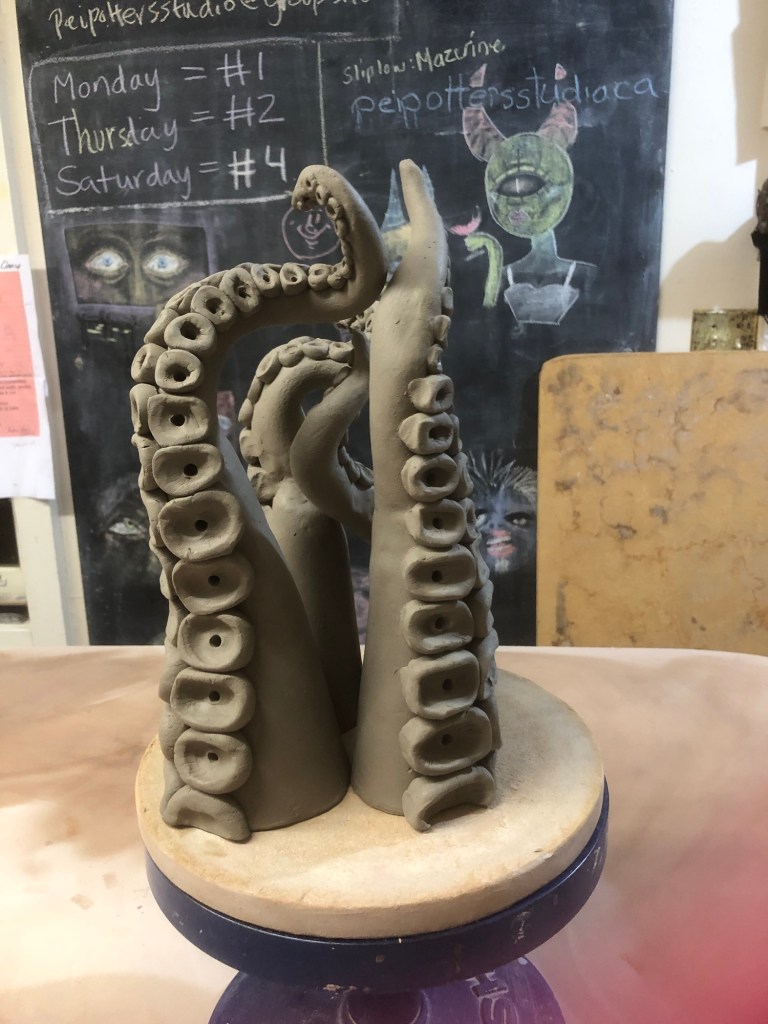
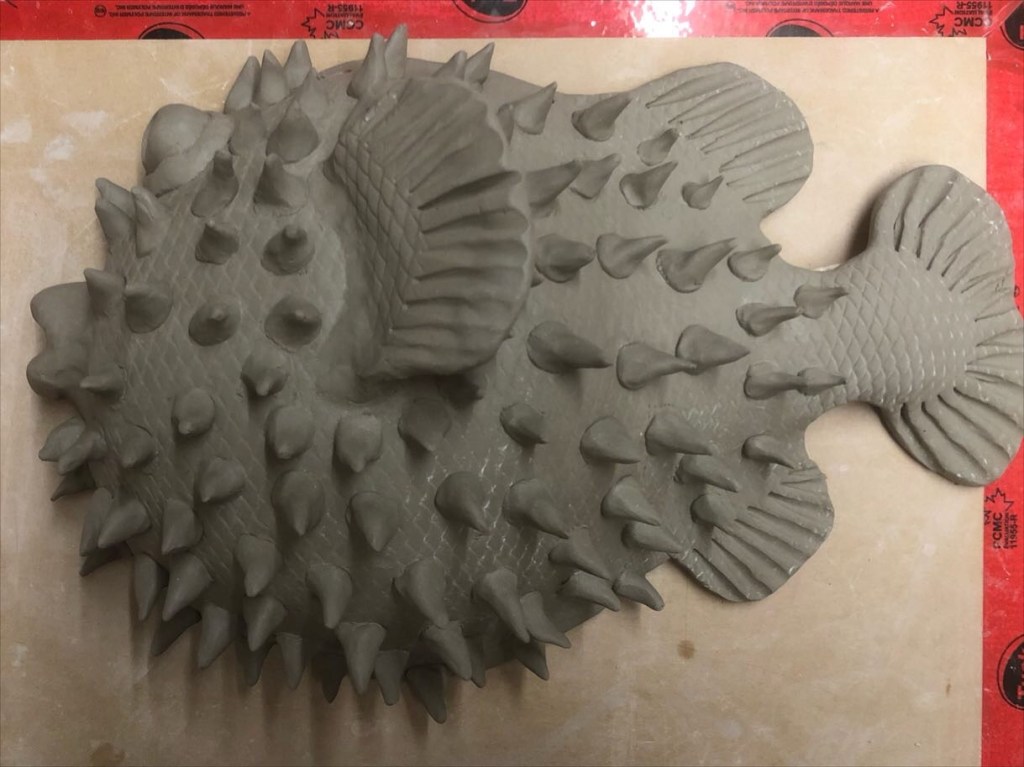
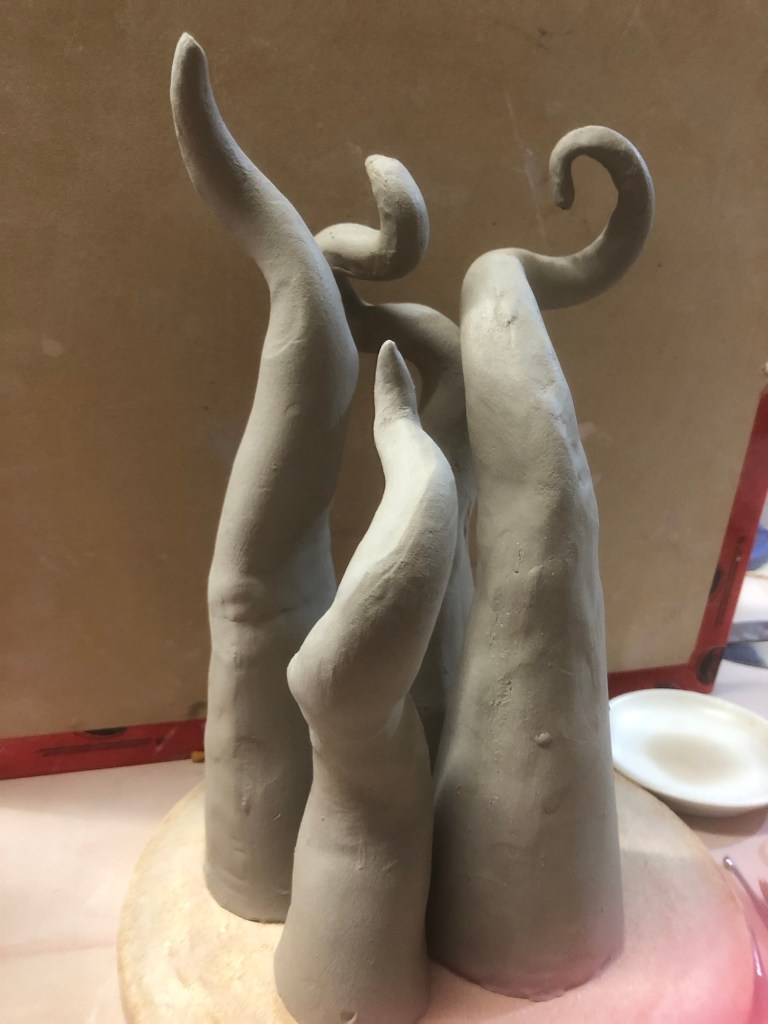
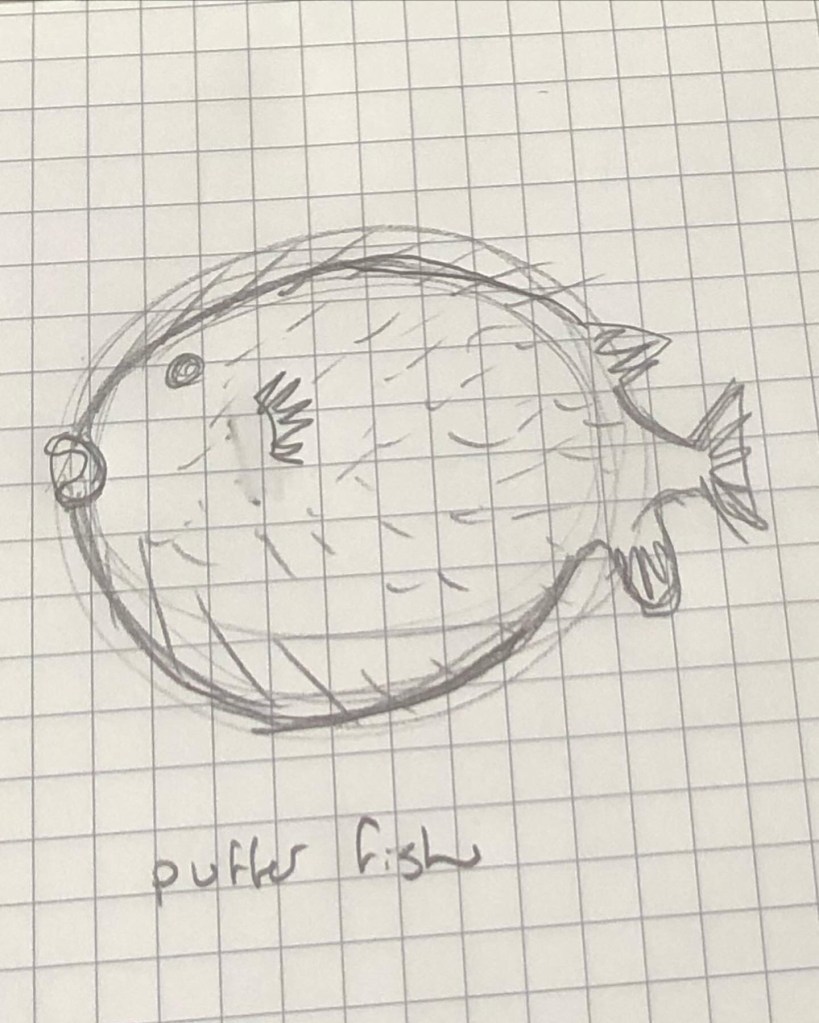
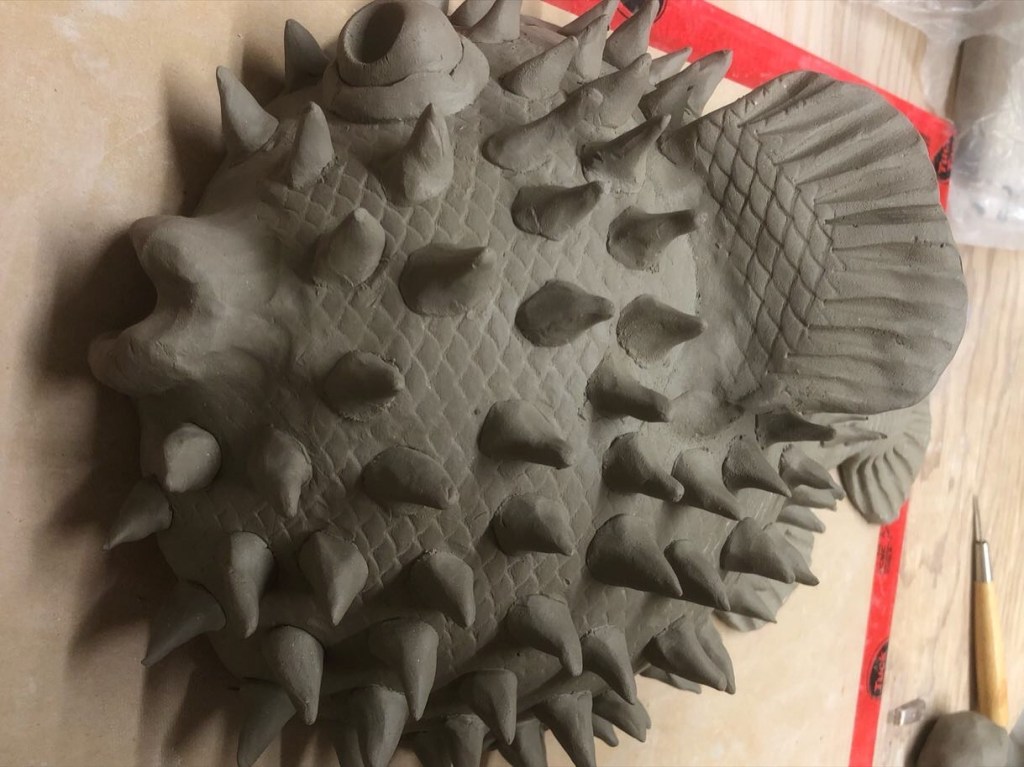
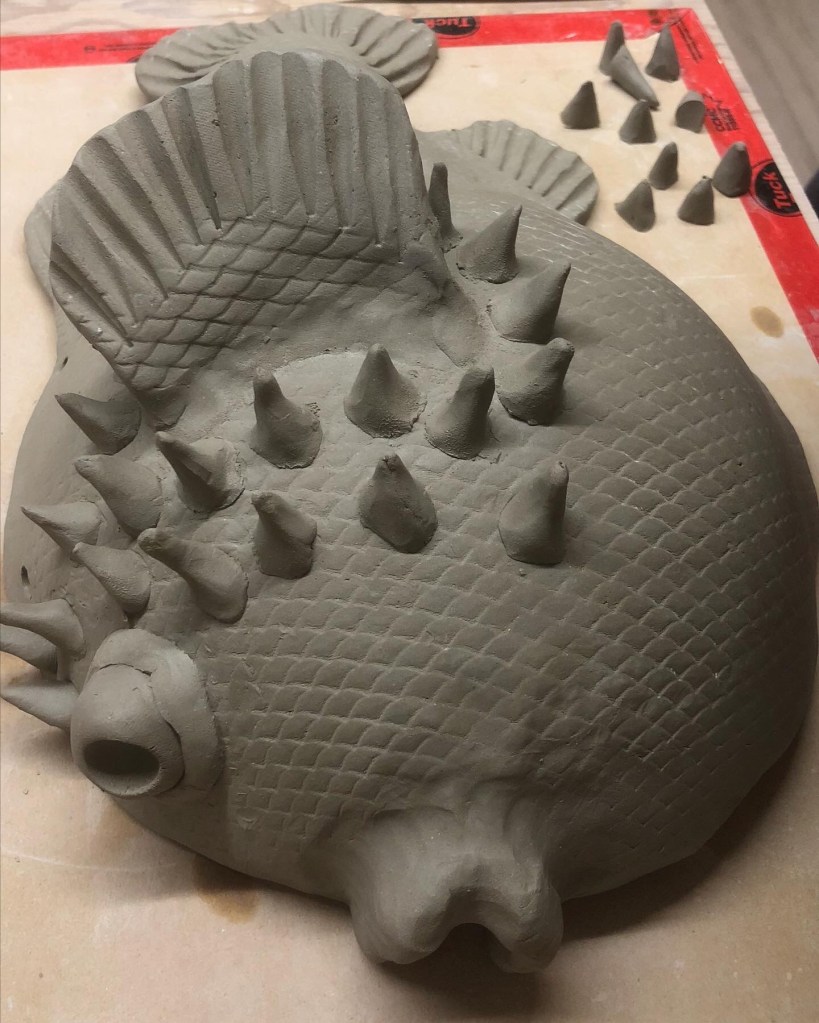
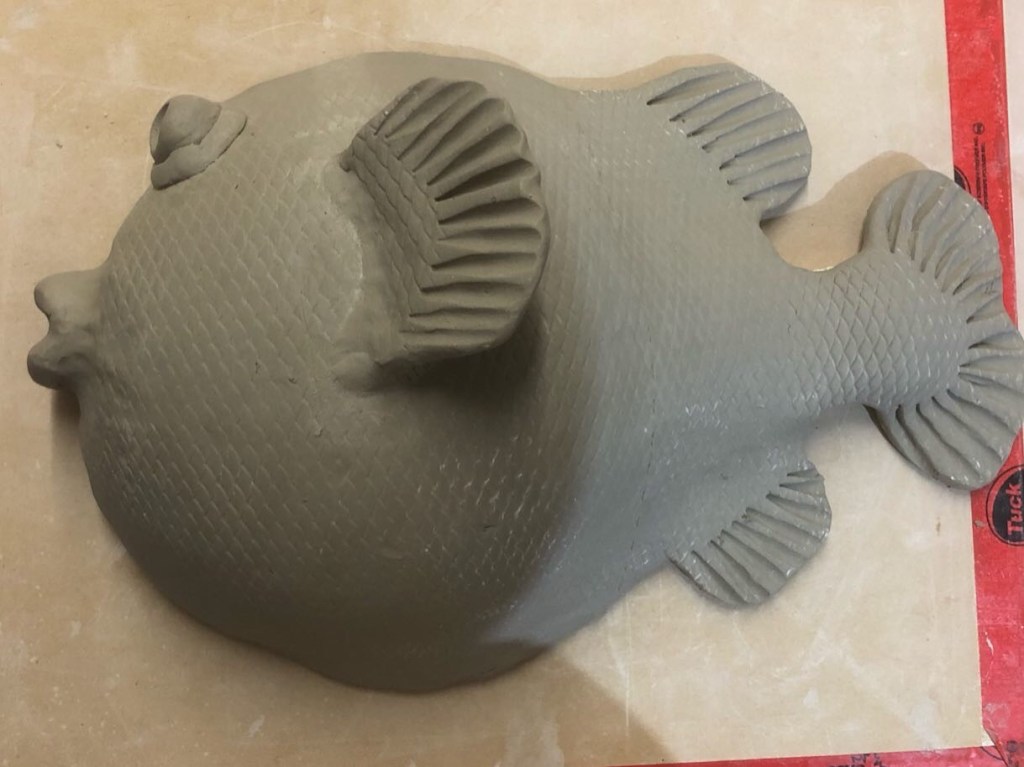
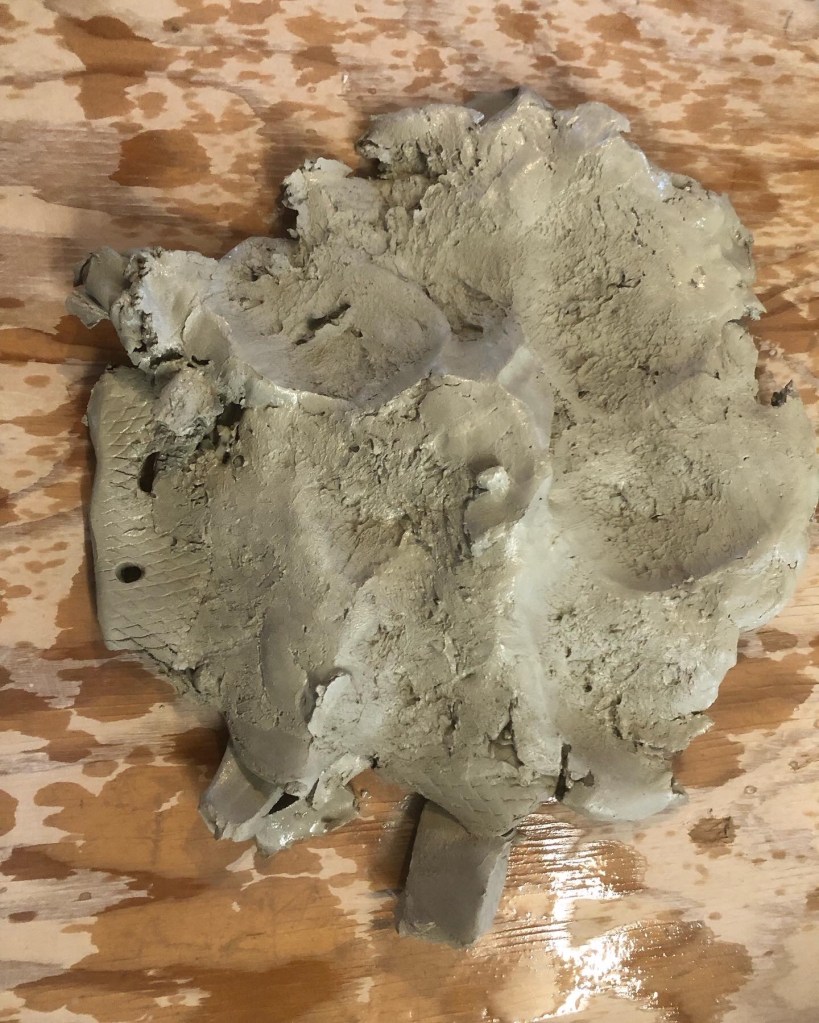
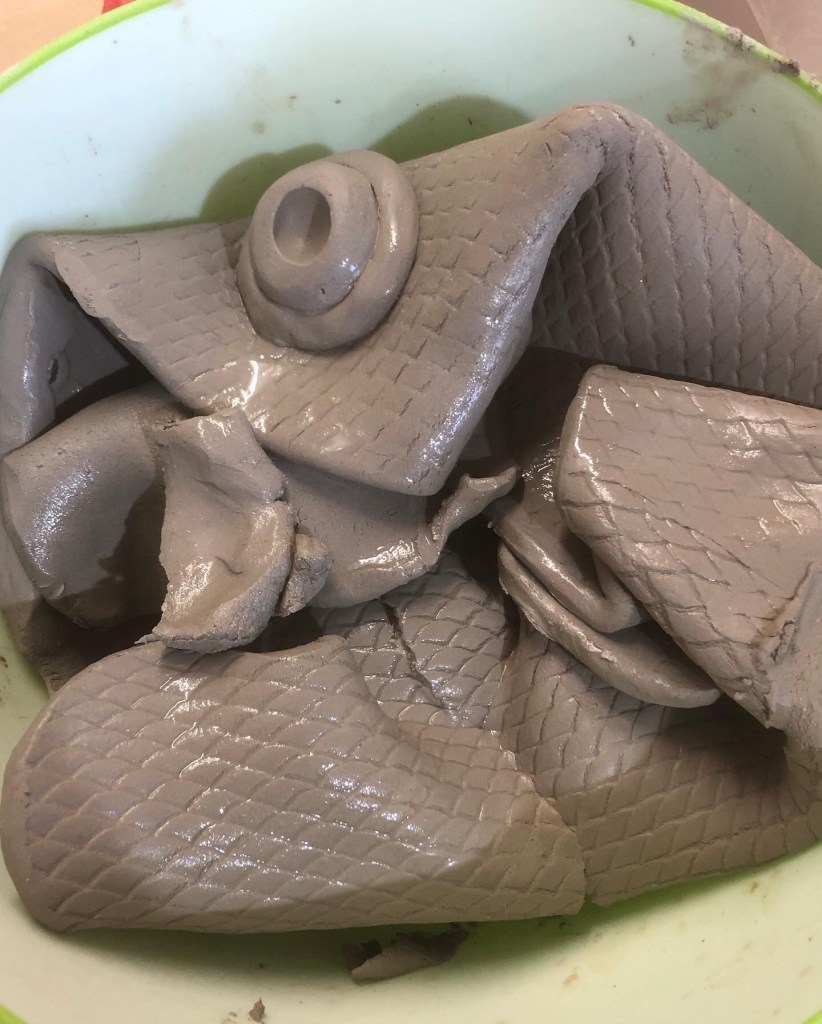
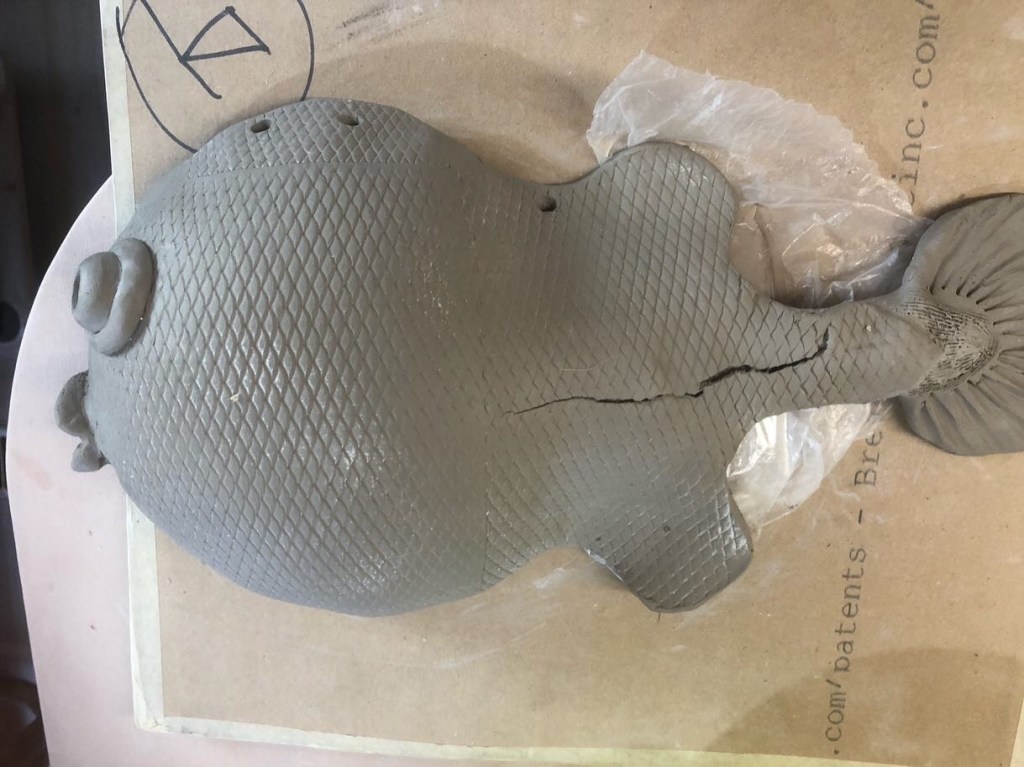
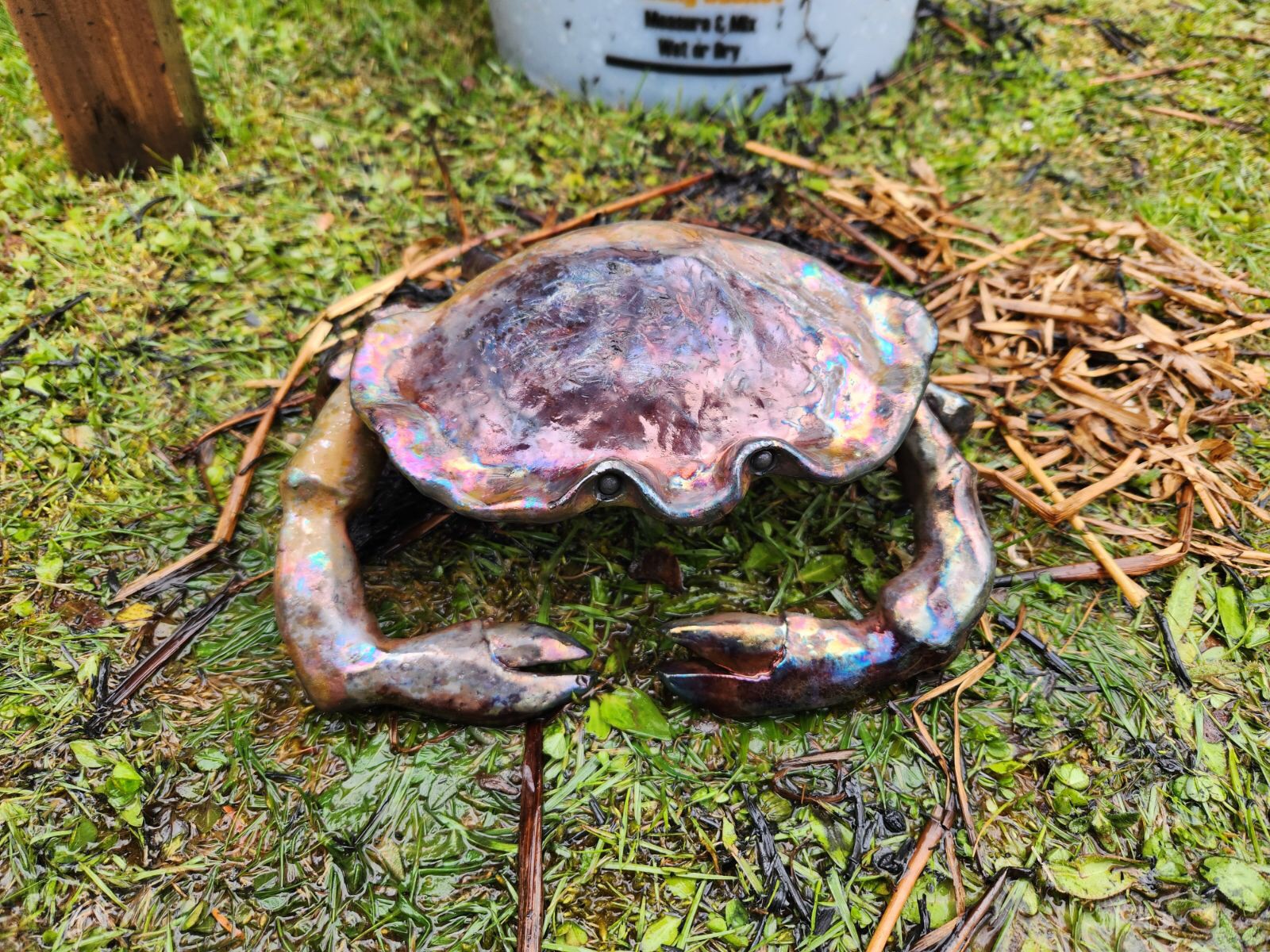
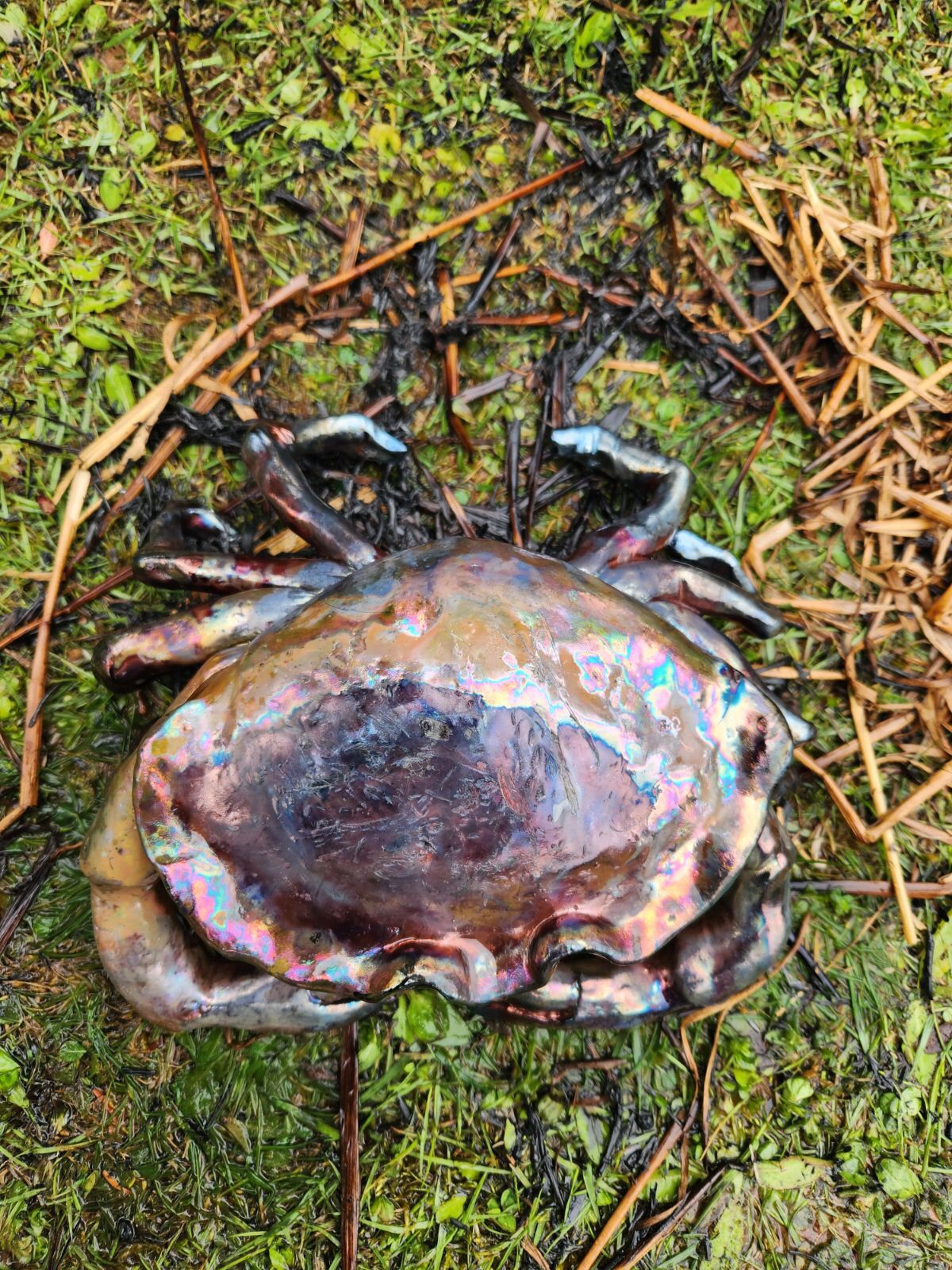
Tim Isaac is coming to do a raku event with the PEI Potter’s Studio in May! Which means it’s time to prep some pieces for this event. Over the last few years, I’ve been crafting a collection of sea creatures that live on the walls and surfaces of my living room. You can check some of them out under my Octopus’s Garden tab. This year, i’ve got a set of tentacles and a puffer fish to put through the intense process of a raku firing. Check them out as they wait to dry and their first test of structural integrity of a bisque firing.
Notes on process:
Clay: Thompson Raku, enough grog to stand on its own, enough plasticity to play with form
Equipment: extruder, slab roller, drywall sheets
Tools:
– magic water
– my trusty knife
– Mud Tools: ribs and scrappers
– scoring tool
– hole punch
– Euclid Stainless Modeling tools #405 & #23
– fish scale texture mat
Pufferfish:
– thicker slab compressed with rib and textured (cornstarch the plastic mat for easy release).
– shape cut & smooth edges
– drape over round shape, working excess to mouth region
– texture fins and attach using deep scratches and magic water
– make holes or an attachment point for hanging/display
– cut extruded clay coils and pinch into spines, attaching all over fish body
– control dry over a few days
* my puffer fish body was too thin initially and suffered a deep crack in the clay while working the tail. I scraped it and restarted. With raku, there’s little room for error in the form, any little defect is an opportunity for it to catastrophically fail in the extreme firing process.
Tentacles:
– thinner slab compressed with rib wrapped around newspaper covered cone forms
– pieces cut and joined, blending seams out with #407 tool
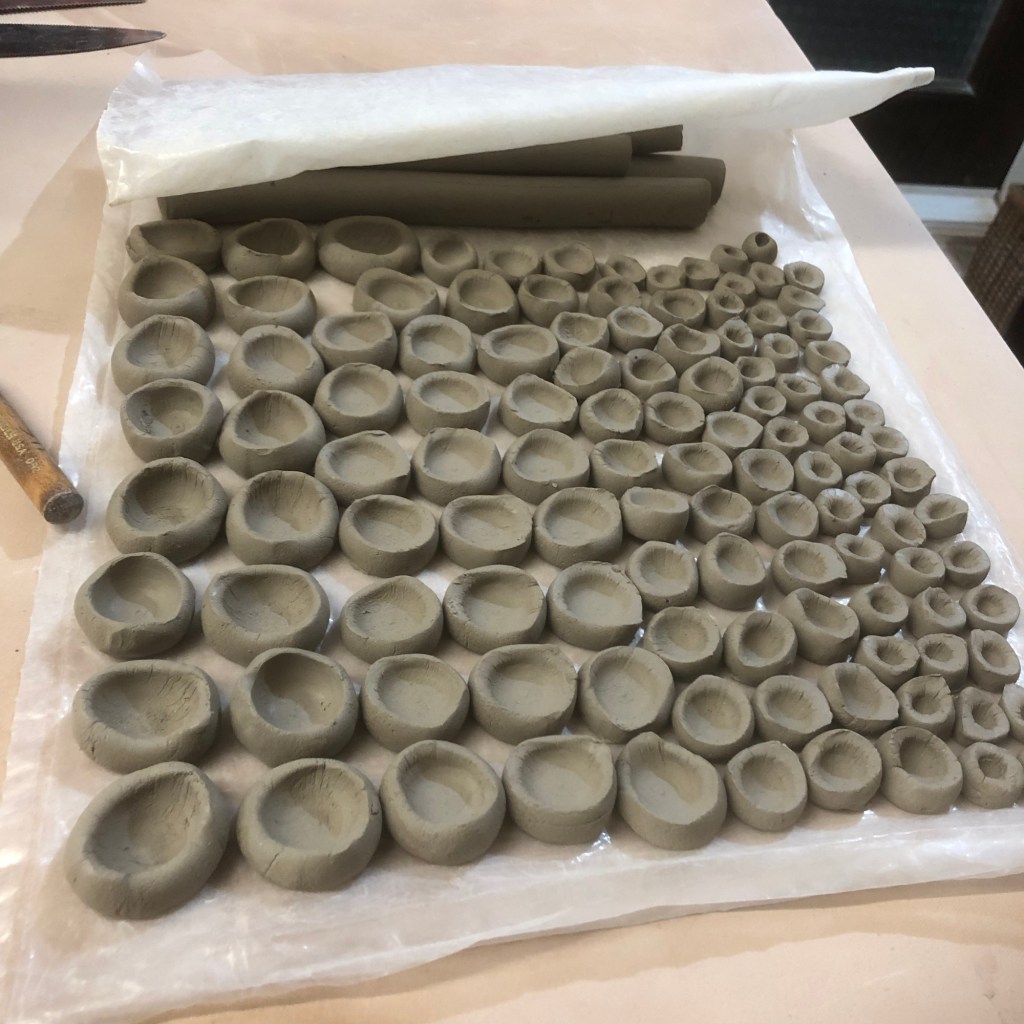
– cones shaped while coils of various thicknessed extruded
– coils cut into chunks and pressed in the center using plastic and various rounded shapes to create suckers
– use pin tool to scratch both pieces and attach with magic water
– holes pierced in center of each sucker
Glazes: (will be added later)
 Place In Nature Studios
Looking good.
<
div>Wondering if you could try a litt
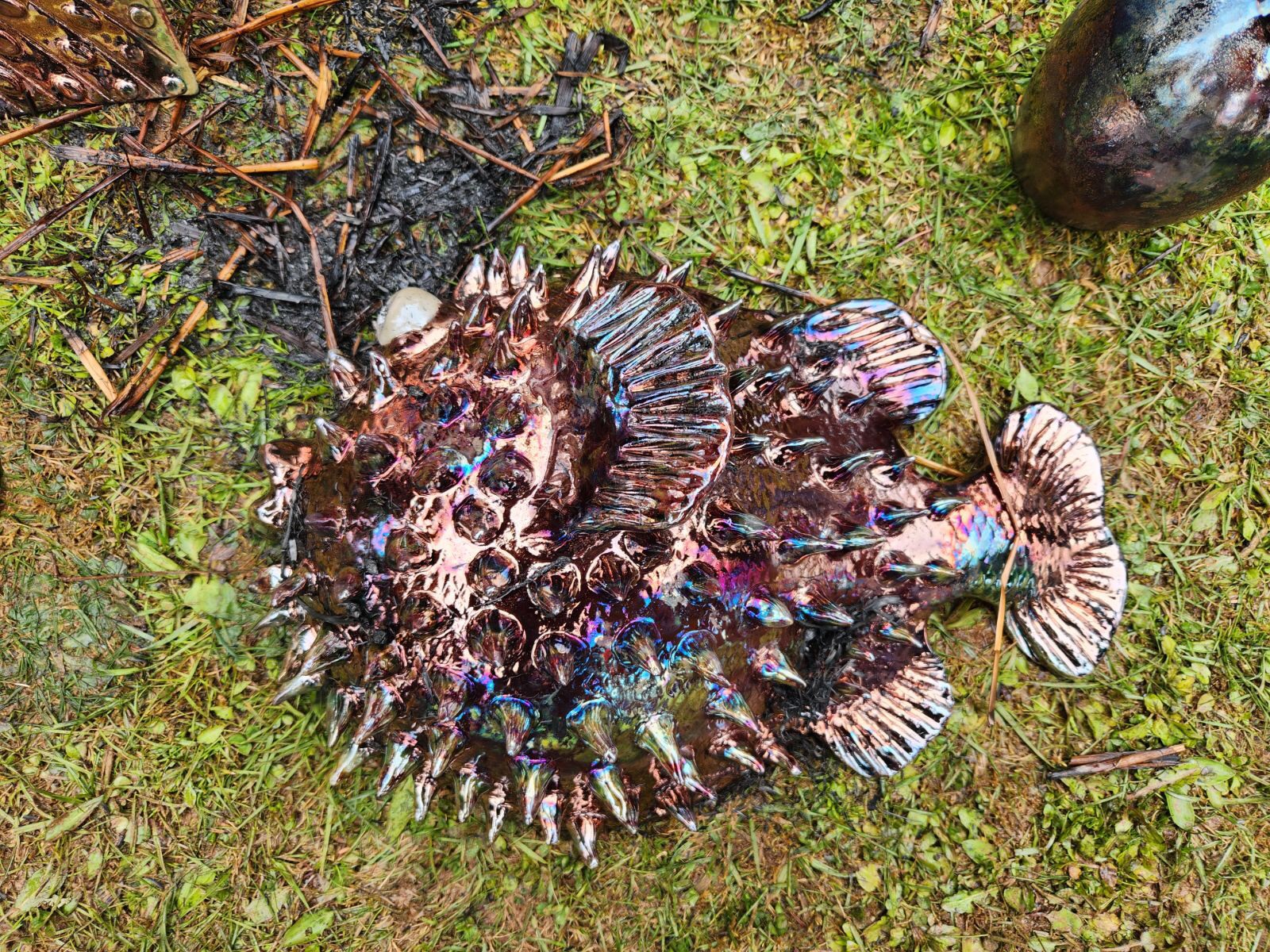
Pingback: Cephalopod consortium: a raku firing | Place In Nature Studios